
There's a building tension. Visible is the frosty air exhaled by my rivals as they perform the "about to run" wiggle on the beginning point.
A rapid twitch of the hips.
I'm lined up for my local 5km community parkrun and I'm serious. It's almost time...
Hold on. I have to adjust my tracker. As does the runner beside me.
The person in the line sighs. I won't start until… done! GPS ready, away I go.
Amidst the crowd, it's difficult to find a person without a smartwatch on it. And this extends beyond us athletes who use them.
We're witnessing a booming, multi-billion dollar industry. Names like Garmin are prevalent, each with an wide range of diverse devices to suit a range of lifestyles. According to how feature-packed the model you choose, price tags can start from an affordable sum to a significant investment.
"I find it infuriating, I'm unable to switch off."
"It comforts me… It feels like a friend guiding me."
"Stop telling me I've experienced a restless night."
Just some of the comments I've received from fellow device users when I question what they feel about theirs.
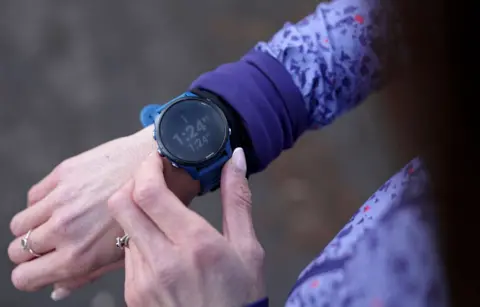
The Monitoring Conundrum
My thoughts on mine? At this moment, annoying. It's indicating I'm not hitting my target, making me wonder whether the overhead branches along my route are blocking my GPS connection.
Countless individuals of us fasten these little monitors onto our wrists and wear them all day and night, seemingly unconcerned with the fact they're constantly tracking us.
Long past are the days when we used them solely to give us an estimation of our daily steps. Currently, they can track our sleep patterns, heart rate, glucose levels, our VO2 max.
It's difficult to find a bodily function they aren't designed to measure.
But can they do what they claim to do? And are the data points we scrutinise a faithful picture of reality? Do they boost our daily wellness, or do the plethora of readings and motivational messages just increase our daily stresses?

A Complicated Bond
"I find myself getting a a little obsessed with mine," a wearer reveals.
While she appreciates how her device monitors her exercise, she finds some of its other features "overwhelming" at times - a feeling first discovered during a pregnancy.
Prior to discovering she could change its configuration, her smartwatch repeatedly informed her she was not being productive enough. In a new phase, the watch frequently reports her she's had a poor sleep score.
"I am caring for a infant, I don't need to be told my sleep was poor," she says. "I'm acutely aware all too clearly."
Why doesn't she just stop wearing it?
"I suppose I could, perhaps, but I've got this complicated dynamic with it," she continues. "I appreciate it for its exercise data, I sometimes question whether the additional features it can now do is perhaps excessive for me."
How Do They Work?
Different brands of smartwatch has its own proprietary way of tracking your bodily functions and processing your data, but the most use optical sensors on the back of the watch.
They commonly shine small, green LED lights onto your skin which can observe pulsation, identifying your heartbeat. Higher-end devices detect changes in the bioimpedance that flows through the skin to assess your stress levels.
A Fine Balance
One expert says that in general for smartwatches, it's a "delicate equilibrium" - while the ever-evolving tech could realistically save lives, "spotting abnormalities before we notice anything", it could also turn us device users into the "concerned but fine".
He points out that the most advanced wearables can conduct tests like heart rhythm analysis, which continuously monitor how stable the heart is. They can alert if someone is experiencing a heart arrhythmia, where there is erratic electrical activity in the heart causing an arrhythmia.
This does not automatically signal someone is about to have a cardiac event, but it can give an advance notice they might be more susceptible of a stroke in the years to come.
But how to interpret these readings is complicated. The expert concerns that as additional features are incorporated, people may find it hard to fully understand their data.
"I remain sceptical that the ability to monitor so many metrics is such a beneficial thing," he says.
A health researcher specialising in wearable tech concurs. Research into the effect of wearable tech on a set of heart condition patients suggested a minority of those who were given devices to monitor their cardiac function experienced greater stress and were "had a higher tendency to use medical services".
She observed a vicious circle with her patients - they spotted a concerning reading on their watch. They felt anxious. Their heart rate rose. They got increasingly anxious. They checked again, and their anxiety rose further.
"Upon viewing numbers about ourselves that we can't properly interpret then, of course, we are going to want to know more," the psychologist says. "We monitor, we check again - it becomes a feedback loop."


